IDEAS / POST
What a $12 Body Wash Taught Me About Clarity
I was killing time in the drugstore shampoo aisle while my wife stocked up, milling about in that disinterested way where nothing’s on your list and everything’s fair game.
Method and Every Man Jack caught my eye first. No surprise there, seeing as I loved both brands. Both have serious ‘clean’ care cred, and Method’s bottles are a feast for the eyes.
Then a bottle of Native stopped me cold. I’d never seen the brand before. Square, brutalist shape with euro-modern type. My inner design nerd took the bait.
I picked it up and turned it over with one simple, low-stakes question in mind: is this clean and green, or just cool?
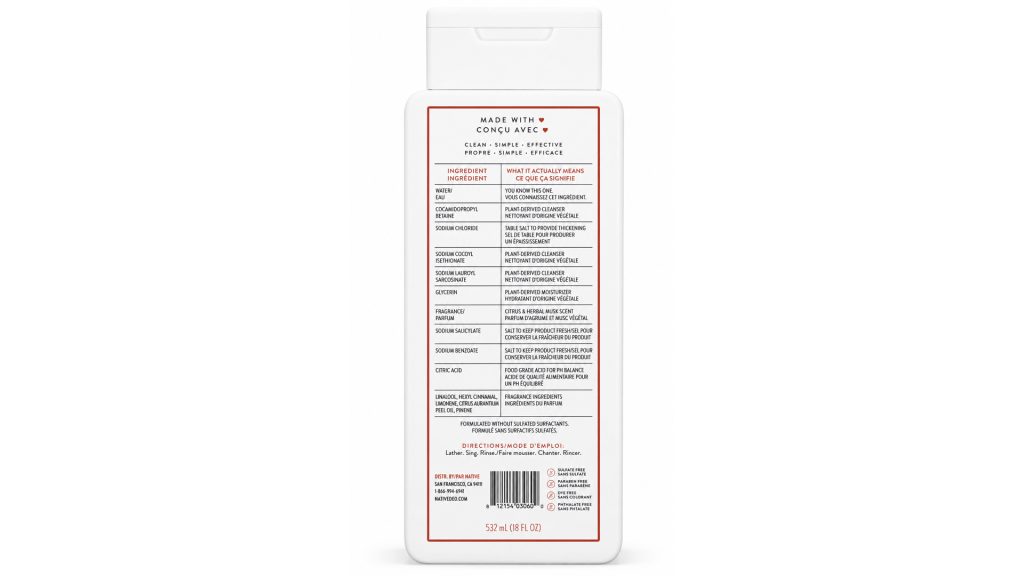
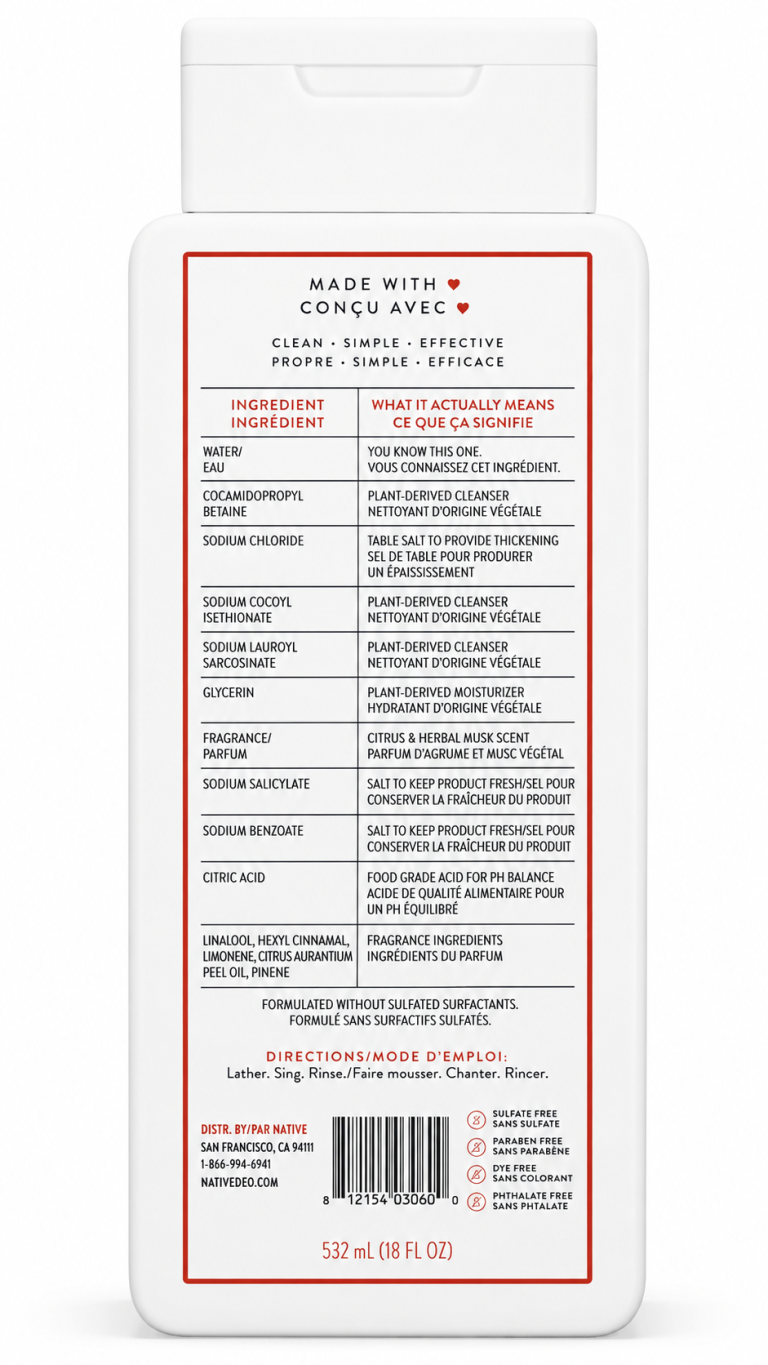
What I saw kind of blew my doors off. Anyone familiar with body products knows ingredients are listed in a block of word salad. But Native presented them as an infographic covering the entire back panel. Every ingredient, translated into plain English, right beside the scientific name.
Finally, someone had pulled back the curtains and let me see what the heck Cocamidopropyl Betaine actually was!
I walked out with the Native.
Let that sink in: I entered that aisle disinterested, and already loyal to two other brands. I left with a bottle I didn’t need (I have a half full bottle of Every Man Jack already in the shower) from a company I’d never heard of.
Loyalty Got Noticed. Clarity Got Bought.
Method and Every Man Jack had every advantage in that moment. Recognition, trust I’d banked from past purchases, and in Method’s case, great design.
They lost the sale to a brand that scratched an itch for ingredient clarity I never knew I had.
I thought this would be worth writing about. Native saw, and addressed a need that other, highly progressive brands (not to mention the 99 duller brands on shelf) had completely ignored.
This proclivity to assume you know what your audience wants – whether that’s confusing ingredient lists or jargon on a pitch deck – is ubiquitous. Ask any CEO who’s asked a technical founder to explain their product.
The ‘Inside The Jar’ Problem
Inside the jar thinking is what happens to smart people who are too close to their own product. They assume everyone knows what they know, and wants what they want.
Meanwhile, outside the jar, we’re disinterested at best. And confused by hopelessly confusing pitches at worst.
No brand or category is immune. It comes with the ‘expert’ territory.
Now, if you’re selling a technical product to technical buyers, by all means use your inside the jar talk. After all, you’re both fluent in the same language.
But sell that same technical product to civilians – people who just want soap, not a chemistry lesson – and the jar becomes the whole problem. What reads as precise and honest to an expert formulator reads as a wall of words to everyone else.
Left alone, that gap costs you the sale.
The Stakes Are Higher Than You Think
I’m very much living in this world right now.
One of my clients, Phycus Biotechnologies, created the world’s first 100% bio-based glycolic acid for beauty products. Their mission isn’t just to sell an ingredient, but to help the brands who use it explain, in human terms, why any consumer should care.
The stakes are high. According to Mintel and Euromonitor, 93% of adults already use at least one “clean” personal care product, but 30% percent of them admit they don’t actually know what “clean” or “natural” means.
Further, 54% read the ingredient list on pack, and 42% want brands to explain what’s in the bottle and why. When brands do it well, 52% of these consumers say they feel better.
So why ongoing word salad ingredient lists?
For a start, consumers often can’t articulate what they actually want. They’re like me, browsing the shampoo aisle. It’s only when they see awesomely easy ingredient lists that a light goes on.
Sure, research can uncover this. But not in the form of a clipboard survey done by a college kid in a shopping-mall.
Getting actual clarity is a much more subtle art.
Understanding Isn’t Enough
Just understanding isn’t enough, either. You need to turn those insights into something as clever and charming as Native’s wry ingredient list. That’s where creativity comes in.
Years ago, I was engaged to help SISU Vitamins drastically bump sales.
Customers told us, again and again, that they had no idea what any given supplement actually did for them. Snap quiz: what’s the benefit of CoQ10? See?
The fix wasn’t more words. Instead, we built bold bottle graphics that explained without words what the supplement inside did.
Native’s full-back infographic is the same move, dressed differently. Clarity, dressed in a bit of magic.
Turn Your Own Bottle Around
Next time you look at your own marketing – your website, your deck, your pitch – do what I did with the Native bottle. Turn it around. Read it as a stranger would, someone with no stake in your expertise and no patience for your jargon. Even better, ask a stranger to do it for you.
If you get a head scratch, you’ve lost. If you get a smile, you get someone walking out the door with your bottle of body wash.
Frequently Asked Questions
What does “clean” actually mean on a personal care label?
There’s no single legal definition. Most brands use “clean” to signal safety, non-toxicity, natural ingredients, and eco-friendliness, but the term itself is unregulated, which is why nearly a third of consumers admit they don’t know what it actually means when they see it on a bottle.
Why do so many “clean” brands still use confusing ingredient lists?
Because the people writing them are experts, and experts forget what it’s like not to be one. It’s a version of what innovation circles call inside the jar thinking: you’re too close to your own product to see it the way an outsider does. The chemistry isn’t dishonest, it’s just written in a language most buyers don’t speak.
Does explaining ingredients actually change buying behaviour?
Yes. For example, according to Mintel, over half of beauty product consumers say they read the ingredient list on pack before buying, and more than 40% specifically want brands to explain what’s in the product and why. When brands do this well, over half of consumers report feeling genuinely better about the purchase. That’s not a marketing nicety, it’s a measurable trust signal.
How do you uncover a need customers can’t articulate themselves?
Standard surveys and intercept questionnaires capture what people say, not what they feel beneath the surface. Surfacing the real need takes interpretation, not just data collection – reading the gap between someone’s stated answer and their actual behaviour, the way I did the moment I picked up a bottle I hadn’t planned to buy.
What’s the difference between Marc’s Clarify and Create methodology in this context?
Clarify identifies the real, often unspoken pain point. Create is what you build in response. Understanding alone isn’t enough to close a sale. Native’s full-back ingredient infographic and the on-bottle graphics we built for SISU are both examples of Create: taking a clarified insight and giving it enough imagination to actually be remembered.